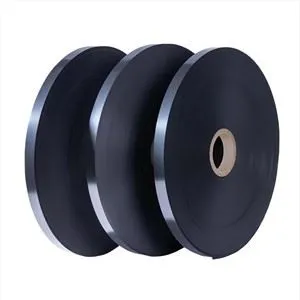
As a supplier of PS white conductive sheets, I often encounter inquiries about various technical aspects of our products. One of the most frequently asked questions is about the bending strength of PS white conductive sheets. In this blog, I'll delve into the concept of bending strength, its significance for PS white conductive sheets, and how it impacts their performance in different applications.
Understanding Bending Strength
Bending strength, also known as flexural strength, is a measure of a material's ability to resist deformation under a bending load. When a force is applied to a material in a way that causes it to bend, the material experiences both tension and compression on its outer and inner surfaces respectively. The bending strength is the maximum stress that the material can withstand before it breaks or fails under this bending force.
Mathematically, bending strength can be calculated using the formula for a simply supported beam under a three - point bending test. For a rectangular cross - section specimen, the bending strength ($\sigma_b$) is given by:
$\sigma_b=\frac{3FL}{2bh^2}$
where $F$ is the maximum load at failure, $L$ is the span length between the supports, $b$ is the width of the specimen, and $h$ is the height (thickness) of the specimen.
Bending Strength of PS White Conductive Sheets
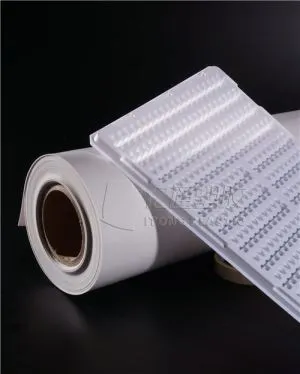
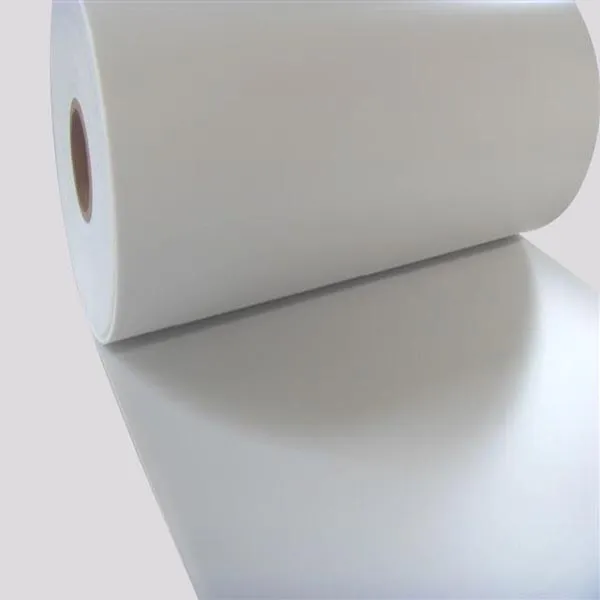
PS (Polystyrene) white conductive sheets are made from high - impact polystyrene (HIPS) with conductive additives. These additives are crucial as they impart the necessary electrical conductivity to the sheets while maintaining the mechanical properties of the base HIPS material.
The bending strength of PS white conductive sheets is influenced by several factors:
1. Composition of Conductive Additives
The type and amount of conductive additives used in the sheet can significantly affect its bending strength. For example, carbon - based additives such as carbon black or carbon nanotubes are commonly used to provide conductivity. However, if the amount of these additives is too high, it can lead to a decrease in the bending strength. This is because the additives may disrupt the polymer matrix structure of the HIPS, reducing its ability to distribute stress evenly during bending.
2. Sheet Thickness
Thicker PS white conductive sheets generally have higher bending strength. As the thickness of the sheet increases, the cross - sectional area available to resist the bending moment also increases. According to the bending strength formula mentioned earlier, a larger thickness ($h$) results in a higher bending strength, assuming other factors remain constant.
3. Manufacturing Process
The manufacturing process of the PS white conductive sheets can also impact their bending strength. Extrusion, for instance, is a common process used to produce these sheets. The temperature, pressure, and speed during extrusion can affect the orientation of the polymer chains and the dispersion of the conductive additives. A well - controlled extrusion process can ensure a more uniform structure, leading to better bending strength.
Importance of Bending Strength in Applications
The bending strength of PS white conductive sheets is of great importance in various applications:
1. Packaging
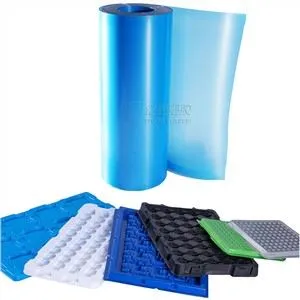
In the electronics packaging industry, PS white conductive sheets are used to protect sensitive electronic components from electrostatic discharge (ESD). These sheets need to be able to withstand some degree of bending during the packaging and handling process without breaking. A sheet with high bending strength can ensure that the packaging remains intact and provides continuous protection to the electronic components.
2. Display Panels
PS white conductive sheets are also used in display panels, such as touchscreens. In these applications, the sheets may be bent or flexed during the manufacturing process or when the display is being installed. Adequate bending strength is essential to prevent cracking or breaking of the sheets, which could lead to malfunction of the display.
3. Industrial Applications
In industrial settings, PS white conductive sheets may be used as covers or partitions in equipment that requires ESD protection. These sheets need to be able to withstand mechanical stress, including bending, caused by normal operation or maintenance activities.
Comparing with Other Similar Products
When comparing the bending strength of PS white conductive sheets with other similar products in the market, it's important to consider the specific requirements of the application. For example, PS Natural Anitstatic sheets may have different bending strength characteristics depending on their formulation. These sheets are designed for applications where natural appearance and antistatic properties are important.
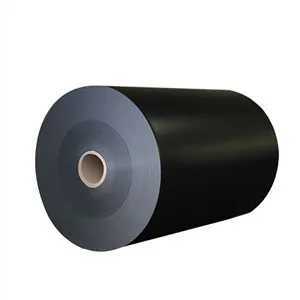
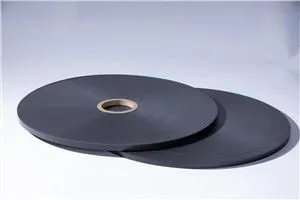
ESD HIPS Black Sheet is another product in the same category. The black color indicates the presence of different conductive additives, which may result in different bending strength compared to the white conductive sheets.
HIPS Disspative Plastic Sheet is also relevant. Dissipative sheets are designed to slowly dissipate static charges, and their bending strength may be optimized for different applications where a balance between dissipation and mechanical performance is required.
Testing and Quality Control
To ensure that our PS white conductive sheets meet the required bending strength standards, we conduct regular testing. We use standardized three - point bending tests in accordance with international standards such as ASTM D790.
During the testing process, we take multiple samples from each production batch. These samples are carefully prepared to ensure uniform dimensions and consistent surface finish. The test results are then analyzed to determine the average bending strength and the variability within the batch. If the results fall outside the specified tolerance range, we take corrective actions such as adjusting the manufacturing process or the composition of the conductive additives.
Conclusion
The bending strength of PS white conductive sheets is a critical property that affects their performance in a wide range of applications. As a supplier, we understand the importance of maintaining high - quality standards for this property. By carefully controlling the composition of conductive additives, sheet thickness, and manufacturing process, we can ensure that our PS white conductive sheets have the appropriate bending strength to meet the diverse needs of our customers.
If you are interested in purchasing PS white conductive sheets or have any questions about their bending strength or other properties, please feel free to contact us for further discussion. We are committed to providing you with the best products and technical support.

References
- ASTM D790 - 17, "Standard Test Methods for Flexural Properties of Unreinforced and Reinforced Plastics and Electrical Insulating Materials"
- "Handbook of Polymer Science and Technology" by D. V. Rosato and D. V. Rosato Jr.
- Research papers on the mechanical properties of conductive polymers in scientific journals such as Polymer Engineering and Science.