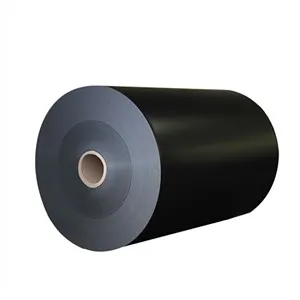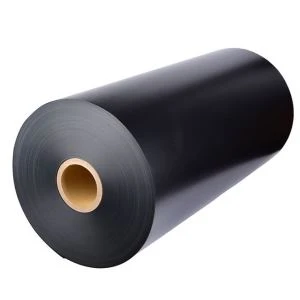
Hey there! As a supplier of PP Natural Antistatic, I've been getting a bunch of questions lately about its barrier properties against gases. So, I thought I'd take a deep dive into this topic and share what I've learned.
First off, let's talk a bit about what PP Natural Antistatic is. PP stands for polypropylene, which is a widely used thermoplastic polymer. It's known for its excellent chemical resistance, high melting point, and good mechanical properties. The "natural" part means it doesn't have any added colorants, and the "antistatic" feature is super important. It helps prevent the build - up of static electricity, which can be a real pain in industries where static can attract dust, cause sparks, or damage sensitive electronic components. You can check out more about PP Natural Anitstatic on our website.
Now, when it comes to gas barrier properties, this is a crucial aspect, especially in applications like food packaging, pharmaceutical containers, and some industrial storage. The ability of a material to block gases can determine the shelf - life of products, their quality, and even their safety.

PP Natural Antistatic has some unique characteristics when it comes to gas barriers. One of the main gases we're concerned about is oxygen. Oxygen can cause oxidation, which leads to spoilage of food, degradation of pharmaceuticals, and corrosion in some industrial products. PP, in general, has a relatively low oxygen permeability compared to some other polymers. But it's not the best out there.
The molecular structure of polypropylene plays a big role in its gas barrier performance. PP has a semi - crystalline structure. The crystalline regions act as barriers to gas molecules, while the amorphous regions allow for some gas diffusion. The degree of crystallinity can be influenced during the manufacturing process. For PP Natural Antistatic, the antistatic additives might also have a small impact on the gas barrier properties. However, in most cases, these additives are carefully formulated to minimize any negative effects on the barrier performance.
Compared to other plastics, like HDPE Sheet Film, PP Natural Antistatic has different gas barrier characteristics. HDPE (High - Density Polyethylene) has a higher density and a more ordered molecular structure, which generally gives it better gas barrier properties against some gases, especially oxygen. But PP has its own advantages, such as better clarity and a lower density, which can be beneficial in some applications.
Another gas that we often need to consider is carbon dioxide. In the food industry, for example, carbon dioxide is used in modified atmosphere packaging to extend the shelf - life of products. PP Natural Antistatic has a certain level of carbon dioxide permeability. The permeability of carbon dioxide through PP is generally higher than that of oxygen. This is because carbon dioxide molecules are larger and more polar than oxygen molecules, and they interact differently with the polymer chains in PP.
In some cases, we can improve the gas barrier properties of PP Natural Antistatic. One common method is to use coatings. There are various types of coatings available that can be applied to the surface of the PP sheet. These coatings can act as an additional barrier layer, reducing the gas permeability significantly. For example, some thin - film coatings made of polymers like EVOH (Ethylene - Vinyl Alcohol) can provide excellent oxygen and carbon dioxide barriers.
Another approach is to use multi - layer structures. By combining PP Natural Antistatic with other polymers that have better gas barrier properties, we can create a composite material with enhanced performance. For instance, a multi - layer structure might consist of a layer of PP Natural Antistatic on the outside for its antistatic and mechanical properties, and a layer of a high - barrier polymer in the middle.
In the packaging industry, the gas barrier properties of PP Natural Antistatic can have a huge impact on product quality. For food products, a good gas barrier can keep the food fresh for longer, reducing waste and improving customer satisfaction. In the pharmaceutical industry, it can ensure the stability and efficacy of drugs.
When it comes to industrial applications, PP Natural Antistatic's gas barrier properties can be important for storing chemicals and other sensitive materials. For example, in the storage of volatile chemicals, a good gas barrier can prevent the escape of harmful vapors, protecting the environment and the workers.
If you're in the market for a material with good antistatic properties and reasonable gas barrier performance, PP Anti - Static Plastic Sheet could be a great option. We, as a supplier, have a lot of experience in producing high - quality PP Natural Antistatic products. We can work with you to understand your specific requirements and provide customized solutions.
Whether you need a material for food packaging, industrial storage, or any other application, our team is here to help. We can offer different thicknesses, sizes, and grades of PP Natural Antistatic to meet your exact needs.
If you're interested in learning more about our products or have any questions regarding the gas barrier properties of PP Natural Antistatic, don't hesitate to reach out. We're always happy to have a chat and discuss how our products can fit into your projects. Let's start a conversation about how we can work together to find the best solution for your gas - barrier and antistatic needs.
References:
- Polymer Science: An Introduction by Fred W. Billmeyer Jr.
- Packaging Technology by Wilmer A. Jenkins and James P. Harrington.