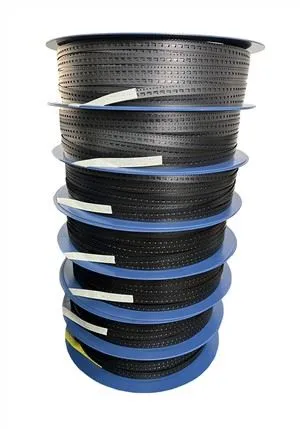
As a trusted supplier of ABS carrier tape material, I've witnessed firsthand the transformative influence of fillers on the properties of this essential product. In this blog, I'll delve into the science behind fillers, explore their impact on ABS carrier tape material, and highlight how these changes can benefit your specific applications.
Understanding Fillers in ABS Carrier Tape Material
Fillers are substances added to the base polymer to modify its properties. In the context of ABS carrier tape material, fillers can be inorganic or organic compounds, each with its unique characteristics and benefits. Common fillers include calcium carbonate, talc, glass fibers, and carbon black. These fillers are carefully selected and incorporated into the ABS resin during the manufacturing process to achieve the desired performance attributes.
Impact on Mechanical Properties
One of the primary reasons for using fillers in ABS carrier tape material is to enhance its mechanical properties. Glass fibers, for example, are known for their high strength and stiffness. When added to ABS, they can significantly improve the tensile strength and flexural modulus of the carrier tape. This means that the tape can withstand higher stresses and strains without breaking or deforming, making it suitable for applications where durability is crucial.


Calcium carbonate and talc are also popular fillers for improving mechanical properties. They act as reinforcing agents, increasing the hardness and dimensional stability of the ABS carrier tape. This is particularly important in applications where the tape needs to maintain its shape and size under various environmental conditions. For instance, in the electronics industry, where components are often transported and stored in different temperature and humidity conditions, a carrier tape with good dimensional stability is essential to ensure proper alignment and protection of the components.
Impact on Thermal Properties
Fillers can also have a significant impact on the thermal properties of ABS carrier tape material. Carbon black, for example, is a well-known filler for improving thermal conductivity. When added to ABS, it can help dissipate heat more effectively, reducing the risk of overheating and thermal damage to the components stored in the carrier tape. This is especially important in high-power electronic applications, where heat generation is a major concern.
On the other hand, some fillers can act as insulators, reducing the thermal conductivity of the ABS carrier tape. This can be beneficial in applications where thermal insulation is required, such as in the packaging of temperature-sensitive components. By controlling the type and amount of filler, we can tailor the thermal properties of the carrier tape to meet the specific requirements of your application.
Impact on Electrical Properties
In the electronics industry, the electrical properties of ABS carrier tape material are of utmost importance. Fillers can be used to modify the electrical conductivity of the tape, making it suitable for different applications. Carbon black, for example, can be added to make the carrier tape electrically conductive, which is useful for applications where static electricity needs to be dissipated. This helps prevent electrostatic discharge (ESD) damage to the sensitive electronic components stored in the tape.
Conversely, some fillers can be used to make the carrier tape electrically insulating. This is important in applications where electrical isolation is required, such as in the packaging of high-voltage components. By carefully selecting the filler and controlling its concentration, we can achieve the desired electrical properties for your specific application.
Impact on Optical Properties
The optical properties of ABS carrier tape material can also be affected by fillers. For applications where transparency is required, such as in the packaging of visible components, a clear ABS carrier tape is often preferred. However, the addition of fillers can reduce the transparency of the tape. To overcome this, we offer Transparent ABS Carrier Tape Material that is formulated to maintain high transparency while still benefiting from the improved properties provided by fillers.
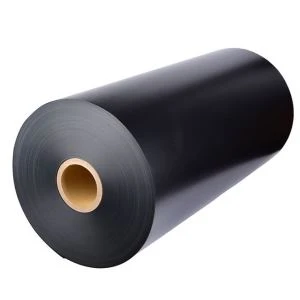
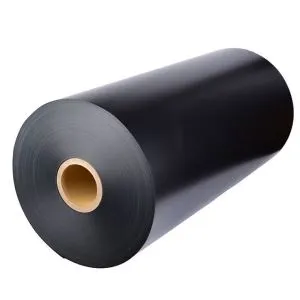
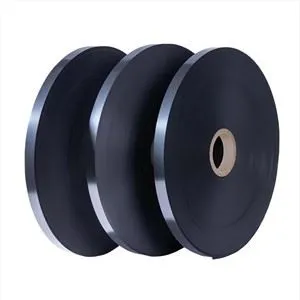
On the other hand, if you need a carrier tape with specific color or appearance, fillers can be used to achieve this. For example, carbon black can be added to make the tape black, which is often used in applications where light shielding is required. We also offer Custom Transparent ABS Carrier Tape and Black Carrier Tape Material to meet your specific color and appearance requirements.
Choosing the Right Fillers for Your Application
The choice of fillers for ABS carrier tape material depends on several factors, including the specific application requirements, the desired properties of the tape, and the manufacturing process. As a supplier, we work closely with our customers to understand their needs and recommend the most suitable fillers and formulations.
We also conduct extensive testing and quality control to ensure that our ABS carrier tape material meets the highest standards of performance and reliability. Our state-of-the-art manufacturing facilities and experienced team of engineers allow us to produce carrier tapes with consistent quality and performance, regardless of the volume of your order.
Conclusion
In conclusion, fillers play a crucial role in enhancing the properties of ABS carrier tape material. They can improve mechanical, thermal, electrical, and optical properties, making the tape suitable for a wide range of applications. As a supplier of ABS carrier tape material, we are committed to providing our customers with high-quality products that meet their specific requirements.
If you are interested in learning more about our ABS carrier tape material or would like to discuss your specific application needs, please feel free to contact us. We look forward to working with you to find the best solution for your business.
References
- "Plastics Additives Handbook" by Hans Zweifel
- "Engineering Plastics: Properties and Applications" by Charles A. Harper
- "Polymer Composites: Principles and Applications" by David Hull and Terry C. Hull