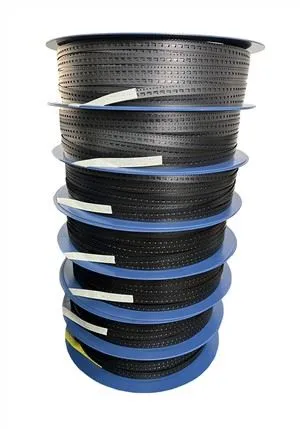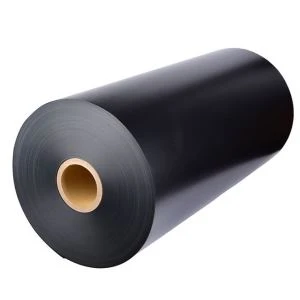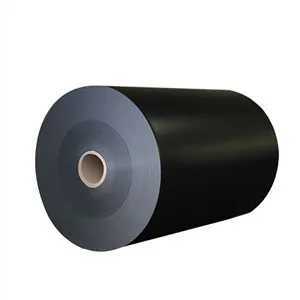
As a supplier of PP White Antistatic products, I often encounter questions from clients regarding the technical properties of our materials. One of the most frequently asked questions is about the dielectric constant of PP White Antistatic. In this blog post, I'll delve into what the dielectric constant is, its significance, and specifically, what the dielectric constant of PP White Antistatic entails.
Understanding the Dielectric Constant
The dielectric constant, also known as relative permittivity, is a fundamental property of insulating materials. It measures the ability of a material to store electrical energy in an electric field. In simpler terms, it indicates how much a material can polarize in response to an applied electric field. A higher dielectric constant means the material can store more electrical energy per unit volume when subjected to an electric field.
The dielectric constant is a dimensionless quantity because it is the ratio of the permittivity of a material to the permittivity of free space (vacuum). Mathematically, it is expressed as:

[ \epsilon_r = \frac{\epsilon}{\epsilon_0} ]
where (\epsilon_r) is the dielectric constant, (\epsilon) is the permittivity of the material, and (\epsilon_0) is the permittivity of free space ((\epsilon_0 \approx 8.854 \times 10^{-12} \ F/m)).
Dielectric Constant of Polypropylene (PP)
Polypropylene is a widely used thermoplastic polymer known for its excellent chemical resistance, mechanical properties, and low cost. The dielectric constant of pure polypropylene is relatively low, typically in the range of 2.2 - 2.6 at room temperature and low frequencies. This low dielectric constant makes polypropylene an excellent electrical insulator, which is why it is commonly used in electrical and electronic applications such as insulation for cables, capacitors, and printed circuit boards.
PP White Antistatic: A Specialized Form of Polypropylene
PP White Antistatic is a modified form of polypropylene that incorporates antistatic agents to reduce the build - up of static electricity on its surface. Static electricity can cause a variety of problems, such as attracting dust and debris, interfering with electronic equipment, and even causing electrostatic discharge (ESD) that can damage sensitive electronic components.
The addition of antistatic agents to polypropylene can have an impact on its dielectric constant. However, the exact dielectric constant of PP White Antistatic depends on several factors, including the type and concentration of the antistatic agent, the processing conditions, and the frequency of the applied electric field.
Factors Affecting the Dielectric Constant of PP White Antistatic
Type and Concentration of Antistatic Agent
Different antistatic agents have different electrical properties, and their presence in the polypropylene matrix can alter the material's ability to polarize. For example, some antistatic agents may have a higher dielectric constant themselves, which can increase the overall dielectric constant of the PP White Antistatic material. Additionally, the higher the concentration of the antistatic agent, the more significant the impact on the dielectric constant is likely to be.
Processing Conditions
The way PP White Antistatic is processed can also affect its dielectric constant. During extrusion or molding, factors such as temperature, pressure, and cooling rate can influence the molecular structure and orientation of the polymer chains. A more ordered molecular structure may result in a different dielectric constant compared to a more random structure.
Frequency of the Applied Electric Field
The dielectric constant of a material can vary with the frequency of the applied electric field. At low frequencies, the dipoles in the material have enough time to align with the electric field, resulting in a higher dielectric constant. As the frequency increases, the dipoles may not be able to keep up with the changing field, and the dielectric constant may decrease.
Typical Dielectric Constant Range of PP White Antistatic
Based on our experience as a supplier of PP White Antistatic, the dielectric constant of our products typically ranges from 2.4 to 2.8 at room temperature and low frequencies (e.g., 1 kHz). This range is slightly higher than that of pure polypropylene, which is consistent with the addition of antistatic agents.
It's important to note that this is a general range, and the actual dielectric constant of a specific PP White Antistatic product may vary depending on the factors mentioned above. If you need a precise value for a particular application, we recommend conducting dielectric constant measurements on samples of our material under the specific conditions of your use.

Applications of PP White Antistatic Based on Dielectric Constant
The dielectric constant of PP White Antistatic makes it suitable for a variety of applications. Its relatively low dielectric constant, combined with its antistatic properties, makes it ideal for use in electronic packaging. For example, it can be used to make trays and containers for transporting and storing electronic components, where static electricity must be minimized to prevent damage to the components.
In addition, PP White Antistatic can be used in electrical insulation applications. Its low dielectric constant ensures that it does not conduct electricity easily, while its antistatic properties prevent the build - up of static charges on the surface, which could otherwise attract dust and reduce the insulation performance over time.
Our Product Range
As a leading supplier of PP White Antistatic, we offer a wide range of products to meet different customer needs. In addition to our standard PP White Antistatic sheets, we also provide Polypropylene PP Plastic Sheet For Thermoforming, which is suitable for applications that require thermoforming processes. Our PP Flame Retardant Plastic Sheet is another popular product, offering both antistatic and flame - retardant properties. And our Extruded Translucent White PP Sheet provides a combination of translucency and antistatic performance.
Conclusion
The dielectric constant of PP White Antistatic is an important property that affects its performance in electrical and electronic applications. While the general range of the dielectric constant is around 2.4 - 2.8 at room temperature and low frequencies, it can vary depending on factors such as the type and concentration of antistatic agents, processing conditions, and the frequency of the applied electric field.
If you are in need of high - quality PP White Antistatic products, we are here to help. Our team of experts can provide you with detailed technical information and assist you in selecting the right product for your specific application. Whether you are involved in electronic packaging, electrical insulation, or other industries, we have the solutions you need. Feel free to contact us to start a procurement discussion and explore how our products can meet your requirements.

References
- "Polymer Science and Technology" by Donald R. Paul and Charles B. Bucknall
- "Electrical Properties of Polymers" by J. B. Briscoe and W. R. Wyatt