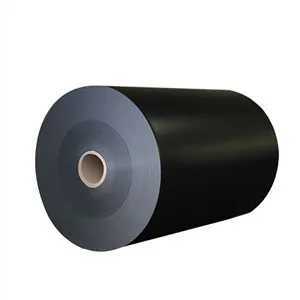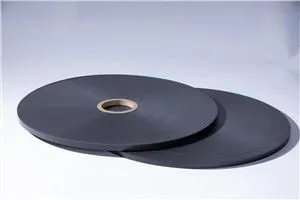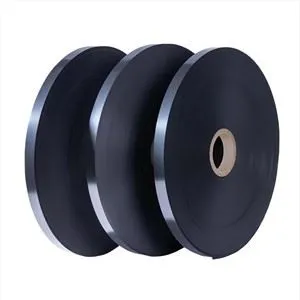
As a supplier of PP Conductive Plastic Sheets, I often encounter inquiries about various properties of our products. One question that comes up quite frequently is, "What is the tear strength of PP Conductive Plastic Sheet?" In this blog post, I'll delve into the concept of tear strength, how it applies to PP Conductive Plastic Sheets, and its significance in real - world applications.
Understanding Tear Strength
Tear strength is a crucial mechanical property of materials, especially plastics. It refers to the ability of a material to resist the propagation of a tear when a force is applied. When a plastic sheet is subjected to a sharp object or an uneven force distribution, a small cut or flaw can start to develop into a tear. The tear strength measures how much force is required to keep this tear growing.
For PP Conductive Plastic Sheets, tear strength is measured in units of force per unit thickness, typically Newtons per millimeter (N/mm). A higher tear strength indicates that the sheet is more resistant to tearing, which is essential in many applications where the material may be exposed to rough handling, sharp edges, or sudden impacts.
Factors Affecting the Tear Strength of PP Conductive Plastic Sheets
Several factors can influence the tear strength of PP Conductive Plastic Sheets. One of the primary factors is the molecular structure of polypropylene (PP). PP has a semi - crystalline structure, and the degree of crystallinity can have a significant impact on tear strength. A higher degree of crystallinity generally leads to a more rigid and brittle material, which may have lower tear strength. On the other hand, a lower degree of crystallinity results in a more flexible material with potentially higher tear strength.
The addition of conductive additives also plays a role. Conductive fillers such as carbon black or carbon nanotubes are commonly used to impart conductivity to PP sheets. However, these fillers can affect the tear strength of the material. If the fillers are not well - dispersed in the polymer matrix, they can act as stress concentrators, reducing the tear strength. Proper dispersion techniques and the right choice of filler loading are crucial to maintaining good tear strength while achieving the desired conductivity.
The manufacturing process is another important factor. Extrusion, the most common method for producing PP Conductive Plastic Sheets, can influence tear strength. Parameters such as extrusion temperature, screw speed, and die design can all affect the orientation of polymer chains and the overall structure of the sheet. A well - optimized extrusion process can result in a sheet with uniform properties and good tear strength.
Measuring the Tear Strength of PP Conductive Plastic Sheets
There are several standard test methods available for measuring the tear strength of plastics. One of the most widely used methods is the Elmendorf tear test. In this test, a specimen of the plastic sheet is clamped in a tester, and a pendulum is used to tear the specimen from a pre - cut slit. The energy required to tear the specimen is measured, and the tear strength is calculated based on the specimen's thickness.
Another method is the trouser tear test. In this test, a rectangular specimen with a slit in the center is pulled apart at both ends, and the force required to propagate the tear is measured. This test is particularly useful for evaluating the tear strength of flexible plastics.
Significance of Tear Strength in Applications
The tear strength of PP Conductive Plastic Sheets is of great importance in various applications. In the electronics industry, these sheets are often used for packaging sensitive electronic components. A high tear strength ensures that the packaging can withstand handling during transportation and storage without tearing, protecting the components inside.
In the automotive industry, PP Conductive Plastic Sheets can be used for interior trim parts. These parts may be subject to abrasion and impacts during normal use, and a high tear strength helps to ensure their durability.
In the construction industry, PP Conductive Plastic Sheets can be used for temporary barriers or protective covers. A sheet with good tear strength can resist damage from wind, debris, and accidental impacts, providing reliable protection.
Our PP Conductive Plastic Sheets and Tear Strength
At our company, we take great care to ensure that our PP Conductive Plastic Sheets have excellent tear strength. We use high - quality polypropylene resins and carefully select conductive additives to achieve the right balance between conductivity and mechanical properties. Our state - of - the - art extrusion facilities allow us to control the manufacturing process precisely, resulting in sheets with consistent tear strength across the entire production run.
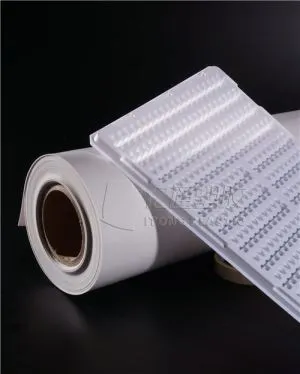
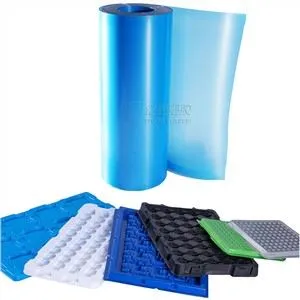
We also offer a range of related products, such as PP Flame Retardant Plastic Sheet, PP Transparent Plastic Sheet Rolls, and Extruded Translucent White PP Sheet. These products are designed to meet different customer needs while maintaining high - quality standards.


Contact Us for Procurement
If you are interested in our PP Conductive Plastic Sheets or any of our other products, we encourage you to contact us for procurement and further discussion. Our team of experts is ready to assist you in choosing the right product for your specific application. Whether you need sheets with high tear strength for a demanding environment or sheets with specific conductivity requirements, we can provide you with the solutions you need.
References
- ASTM D1922 - Standard Test Method for Propagation Tear Resistance of Plastic Film and Thin Sheeting by Pendulum Method.
- ISO 6383 - 2:2004 Plastics - Film and sheeting - Determination of tear resistance - Part 2: Trouser tear method.
- Strong, A. B. (2008). Plastics: Materials and Processing. Pearson Prentice Hall.