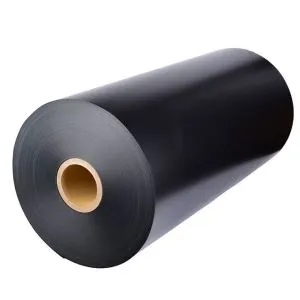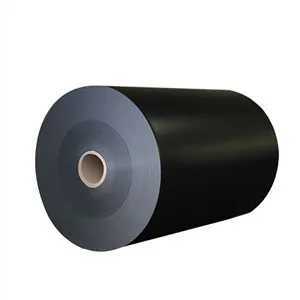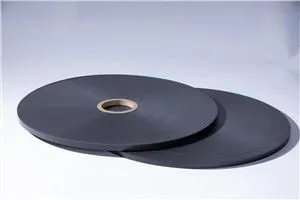
Temperature is a critical environmental factor that can significantly affect the performance and characteristics of various materials, including PS High Glossy Plastic Sheets. As a supplier of these high - quality plastic sheets, I have witnessed firsthand the diverse impacts of temperature on the product. In this blog, I will delve into the details of how temperature can influence PS High Glossy Plastic Sheets, covering aspects such as physical properties, processing, and long - term durability.
Physical Properties at Different Temperatures
Low Temperatures
At low temperatures, PS High Glossy Plastic Sheets become more brittle. Polystyrene (PS) is an amorphous polymer, and its molecular chains have relatively limited mobility at low temperatures. When the temperature drops, the energy available for molecular motion decreases, and the intermolecular forces become more rigid. As a result, the plastic sheet loses its flexibility and becomes prone to cracking.
For example, in cold storage facilities where the temperature can be as low as - 20°C, if the PS High Glossy Plastic Sheet is subjected to sudden impacts or bending, it may crack or shatter. This brittleness can be a significant drawback, especially in applications where the sheet needs to withstand some level of mechanical stress, such as in packaging for products that are handled during transportation at low - temperature environments.
High Temperatures
On the other hand, high temperatures have a different set of effects on PS High Glossy Plastic Sheets. As the temperature rises, the molecular chains in the polystyrene gain more energy and start to move more freely. This increased molecular mobility causes the plastic sheet to soften.
When the plastic sheet approaches its glass transition temperature (Tg), which for general polystyrene is around 90 - 100°C, it begins to lose its shape stability. In high - temperature industrial environments, if the PS High Glossy Plastic Sheet is used in a non - heat - resistant application, it may deform under its own weight or due to external pressure. For instance, if the sheet is used as a display panel in a hot factory area where the temperature can exceed 80°C, it might start to warp, which not only affects its appearance but also its functionality.
Impact on Processing
Extrusion and Molding
Temperature plays a crucial role in the processing of PS High Glossy Plastic Sheets. During extrusion, the raw polystyrene resin needs to be heated to a specific temperature range to achieve the right viscosity for smooth flow through the extrusion die. If the temperature is too low, the resin will be too viscous, and it may cause blockages in the extrusion equipment. This can lead to production delays and increased costs due to equipment maintenance.
Conversely, if the temperature is too high during extrusion, the polystyrene may undergo thermal degradation. Thermal degradation can result in changes in the chemical structure of the polystyrene, leading to a reduction in the mechanical properties of the final plastic sheet. The sheet may have a lower gloss, reduced strength, and a less uniform appearance.
In the molding process, temperature control is equally important. For injection molding of PS High Glossy Plastic Sheets, the mold temperature needs to be carefully regulated. A proper mold temperature ensures that the plastic fills the mold cavity completely and evenly, resulting in a high - quality, defect - free product. If the mold temperature is too low, the plastic may solidify prematurely, leading to incomplete filling and surface defects such as flow lines or short shots. If the mold temperature is too high, the cycle time of the molding process may increase, and the plastic may stick to the mold, causing damage to the finished product.


Post - processing
After the initial processing, temperature can also affect post - processing operations such as cutting, bending, and printing on PS High Glossy Plastic Sheets. For cutting, a higher temperature can make the plastic more malleable, which may lead to a cleaner cut. However, if the temperature is too high, the edges of the cut may melt and form an uneven finish.
When bending the plastic sheet, the appropriate temperature can make the bending process easier and reduce the risk of cracking. By heating the sheet to a slightly elevated temperature, the molecular chains can rearrange more easily during the bending, resulting in a smoother bend. But if the temperature during bending is not controlled precisely, over - heating can cause the sheet to deform excessively, while under - heating may lead to cracking.
Long - Term Durability
Temperature Cycling
In real - world applications, PS High Glossy Plastic Sheets are often exposed to temperature cycling, where the temperature fluctuates between highs and lows over time. Temperature cycling can cause fatigue in the plastic material. The repeated expansion and contraction of the sheet due to temperature changes can lead to the formation of micro - cracks.
Over time, these micro - cracks can grow and propagate, eventually weakening the structure of the plastic sheet and reducing its overall durability. For example, in outdoor applications where the sheet is exposed to daily temperature variations between day and night, the continuous stress caused by temperature cycling can shorten the lifespan of the product.
UV and Temperature Interaction
In addition to temperature alone, the interaction between temperature and ultraviolet (UV) radiation can also have a detrimental effect on PS High Glossy Plastic Sheets. High temperatures can accelerate the degradation process caused by UV rays. The UV radiation breaks the chemical bonds in the polystyrene, and high temperatures can further promote these chemical reactions by increasing the molecular mobility.
This can lead to discoloration, surface degradation, and a reduction in the mechanical properties of the plastic sheet. In areas where there is intense sunlight and high temperatures, such as deserts or tropical regions, the durability of PS High Glossy Plastic Sheets can be significantly reduced if they are not properly protected.
Applications and Mitigation Strategies
Despite the potential negative impacts of temperature on PS High Glossy Plastic Sheets, they are still widely used in various applications. These sheets are popular in the packaging industry due to their high gloss finish, which can enhance the visual appeal of products. They are also used in the display and signage industry for creating eye - catching displays.
To mitigate the effects of temperature, several strategies can be employed. For low - temperature applications, additives can be incorporated into the polystyrene resin during the manufacturing process to improve its low - temperature toughness. These additives can increase the flexibility of the plastic at low temperatures and reduce the risk of cracking.
For high - temperature applications, heat - resistant grades of polystyrene can be used. These grades have a higher glass transition temperature, which allows them to maintain their shape and mechanical properties at elevated temperatures. Additionally, protective coatings can be applied to the surface of the plastic sheet to reduce the impact of UV radiation and high temperatures.
Comparison with Other Plastic Sheets
When compared with other plastic sheets such as Pc Abs Sheet For Sale and ABS Thermoplastic Sheet For ESD Tray, PS High Glossy Plastic Sheets have their own unique temperature - related characteristics. PC/ABS sheets generally have better heat resistance than PS sheets, making them more suitable for high - temperature applications. However, PS sheets often have a higher gloss finish, which is advantageous in applications where appearance is crucial.
ABS thermoplastic sheets used for ESD trays are designed to have electrostatic discharge properties and offer good mechanical strength. They may also have better low - temperature performance compared to PS sheets. But again, the high gloss of PS sheets can be a differentiating factor in certain applications.
Specialized PS Variants
There are also specialized PS variants such as PS Black Dissipative that may have different temperature responses. These variants are often engineered to have specific properties, such as electrostatic dissipation, in addition to the basic characteristics of PS. The temperature impact on these specialized sheets needs to be carefully considered based on their unique formulation and intended use.
In conclusion, temperature has a profound impact on PS High Glossy Plastic Sheets in terms of physical properties, processing, and long - term durability. As a supplier, it is essential to understand these impacts to provide the best advice and products to our customers. Whether it's choosing the right grade of plastic for a specific application or implementing appropriate mitigation strategies, understanding the relationship between temperature and PS High Glossy Plastic Sheets is key to ensuring the success of various projects.
If you are considering using PS High Glossy Plastic Sheets in your project or need more information about how to deal with temperature - related issues, feel free to reach out for a detailed discussion. Our team of experts is ready to assist you in making the best choices for your specific requirements.
References
- "Plastics: Materials and Processing" by John A. Brydson
- "Engineering Plastics: A Practical Guide" by D. B. Todd
- Journal of Polymer Science, various issues related to the properties of polystyrene under different temperature conditions.